.Idk. On Juneteenth And What Freedom Looks Like At Son De L’amour
.idk. discusses Son de L’amour, Juneteenth, and building cultural experiences rooted in celebration, community, and cross-cultural exchange.
By Cyrus Team ·
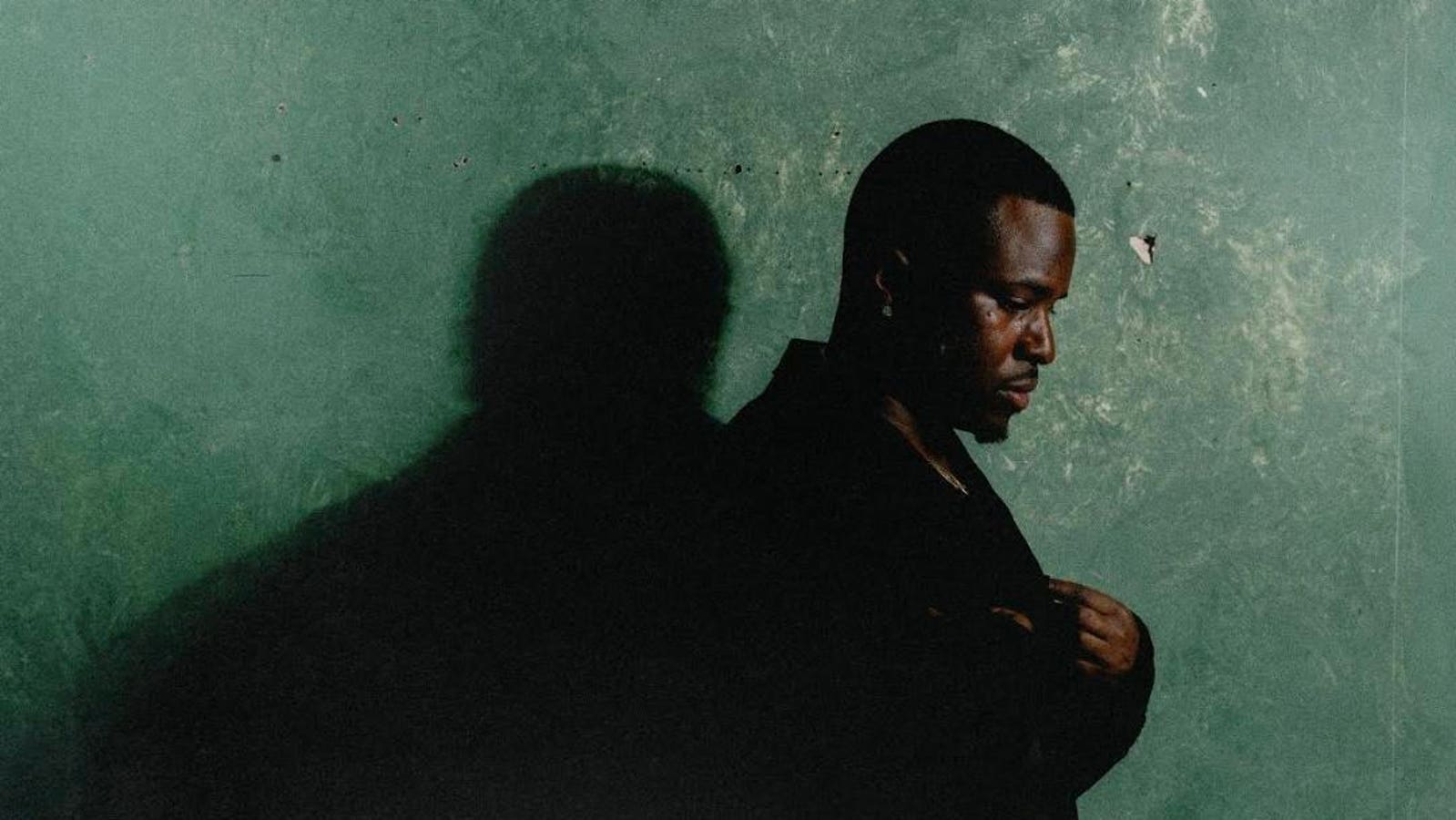

On Juneteenth in Washington, DC, the city doesn’t just celebrate—it remembers out loud. The streets feel heavier, but also more alive, as if history itself is being replayed through sound systems, block corners, museum walls, and embassy halls. This year brings Son de L’amour (“Sound of Love”) from DMV-raised rapper .idk.—a two-day cultural experience unfolding June 19–20 across the city in partnership with the Smithsonian Anacostia Community Museum, the French Embassy in the United States, and the DC Commission on the Arts and Humanities.
Together, the institutions frame culture less as entertainment than as infrastructure, setting the stage for a Juneteenth that moves between memory, music, and public space.
.Idk. On Juneteenth’s Dual Weight And Meaning
Juneteenth—recognized as a federal holiday in the United States in 2021, when it was signed into law—has always carried a dual weight: celebration and delayed arrival. For .idk., that tension is not historical abstraction. It is personal language.
“Juneteenth feels personal because it represents freedom arriving late, but still arriving,” he says. “That idea sits with me because a lot of my life and my music is about delayed freedom, mentally, spiritually, creatively, and literally.”
As he describes it, Juneteenth is not a fixed point in time, but a reminder that liberation is something that must be continuously spoken into existence. “It is not only a historical date,” he continues, “it is a reminder that freedom has to be communicated, protected, celebrated, and reimagined every generation.”


.Idk. Builds Juneteenth As A Cultural Memory
That idea sits at the core of Son de L’amour, which begins June 19 at the Smithsonian Anacostia Community Museum with performances from the Chuck Brown Band and Black Alley—artists deeply rooted in Washington’s sonic lineage, where go-go is not genre so much as memory in motion.
“I’ve experienced Juneteenth mostly through community, reflection, music, and the feeling of people gathering around something bigger than entertainment,” .idk. says. “It has always felt like a day where celebration and responsibility exist at the same time.”
That duality—joy that carries weight—is what shaped the structure of the experience itself. Rather than containing culture in a single venue, Son de L’amour moves through spaces, as if insisting that memory should not be stationary.
By June 20, the experience shifts to the French Embassy, where .idk.’s documentary Pardon Me screens, followed by a conversation titled “Southeast to Paris.” The dialogue explores what it means for creativity to travel without being detached from its origin—how culture can move across borders without losing its accent.
The panel features .idk. and additional special guests to be announced, expanding the conversation into art, fashion, discipline, and diaspora thinking. Later that day, the story returns to the streets with the Son de L’amour Georgetown Block Party—an open, large-scale cultural activation expected to bring together thousands.
The lineup reads like a living archive of DMV sound and evolution: TOB & Friends carries forward go-go’s communal pulse; DJ Money represents the DJs who have long shaped the city’s nightlife and radio identity; YungManny brings humor and youth-driven internet energy; KA$HDAMI reflects the digital-native DMV generation; DPM’s Xang brings grassroots community texture; Pearl and Beloved add emerging and soulful dimensions; while Shabazz further anchors the city’s layered creative ecosystem.
Indigo Reframes Juneteenth Through Community
If Juneteenth is often framed as reflection, here it becomes also a design question: what does it look like to build a cultural ecosystem that holds both history and future at the same time?
That question extends into Indigo, a new artist-first platform making its public debut through the experience. For its founders, Demi Weitz, Luc Giraud, and Saskia Giraud, the shift it represents is structural, not aesthetic.
“Indigo is built on the belief that the music industry is moving from volume to depth. For years, artists have been measured by reach; we believe the future will be shaped by the strength of the communities forming around their work.” she says. “Our mission is to give artists the infrastructure to better understand, grow, and invest in those communities. .idk. has long approached music as something larger than music itself, and that philosophy closely reflects.”
Within that framing, Son de L’amour becomes less a showcase and more a prototype—an attempt to model what happens when culture, technology, and community are designed together instead of separately.
How .Idk. Builds Culture Through Perspective
For .idk., that design begins with perspective. Growing up between the UK and the DMV gave him what he describes as a dual lens—one that made cultural translation feel instinctive rather than aspirational.
“Being from the UK and growing up in the DMV gave me a unique lens,” he says. “I was always seeing culture from more than one angle, and the DMV taught me how much power there is in having your own language, your own rhythm, and your own identity.”
That identity is not treated as static in Son de L’amour. Instead, it is expanded—placed in conversation with institutions that represent different forms of cultural memory and global exchange.
“It was important because those institutions represent different parts of the story,” .idk. says. “The Smithsonian Anacostia Community Museum is rooted in community, history, and Black cultural memory. The French Embassy represents international exchange, diplomacy, and the possibility of culture moving across borders.”
Then he adds the throughline:
“Bringing those worlds together allows the project to say something bigger than any one event… It lets me think beyond performance and into world-building: how music can create dialogue, how community can sit next to institution, and how love can be a real cultural language.”
On Juneteenth, that idea takes on added resonance. If freedom once arrived late, as history records, culture becomes one of the spaces where it continues to arrive—reinterpreted, remixed, and carried forward by each generation that inherits it.
In Washington, DC, Son de L’amour from .idk. unfolds across that idea rather than resolving it, moving between venues, conversations, and performances that connect the city’s institutions with its street-level cultural life.