We’re Injecting Ourselves With the Dead — And Calling It Self-Care
By Vannessa Viljoen · · 5 min read read
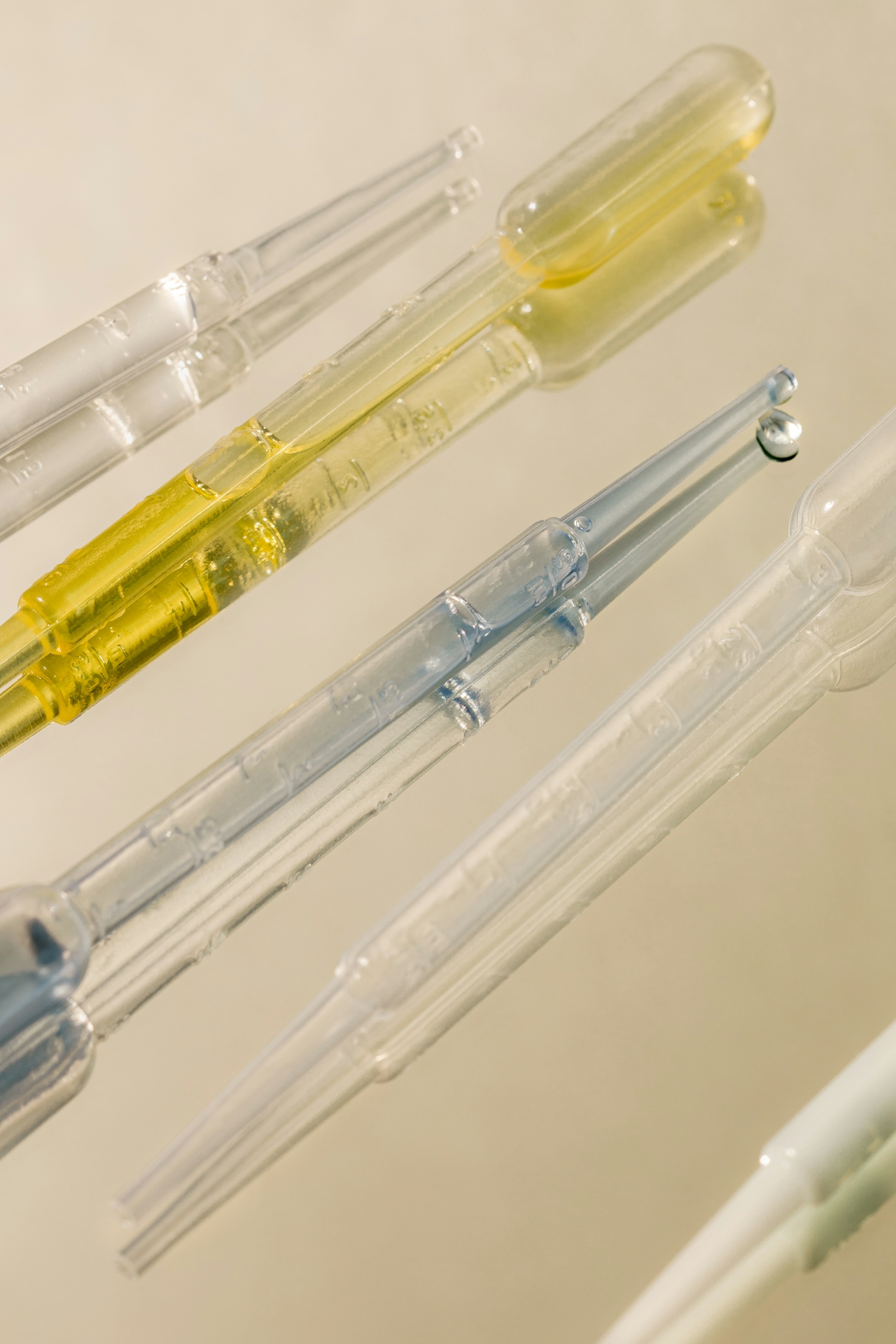
When reports emerged around Alloclae — a cosmetic filler developed using fat derived from cadavers — the immediate reaction in many corners was predictable: discomfort, fascination, and a degree of moral panic. But once that initial response settles, what remains is something more complex, and arguably more revealing.
Because Alloclae does not represent a sudden break from existing trends in aesthetic medicine. It reflects a continuation of them.
Over the past decade, the relationship between individuals and their bodies has undergone a quiet but significant shift. Increasingly, the body is understood not only as something to be lived in, but as something to be managed — maintained, refined, and, where necessary, enhanced in line with evolving standards. These interventions are often framed through the language of autonomy and empowerment, and in many cases, that framing is justified. The ability to make decisions about one’s own body remains an important marker of personal agency.
However, it is equally important to recognise that these decisions are shaped within a broader cultural and commercial environment.
Beauty standards are not fixed. They are dynamic, responsive to media, technology, and market forces. In recent years, those standards have become more complex, often requiring individuals to navigate competing expectations — to appear natural while also meeting highly specific aesthetic ideals. The result is a subtle but persistent pressure to engage in forms of modification that bring the body into alignment with those expectations.
Within this context, the emergence of products like Alloclae begins to feel less anomalous.
If the prevailing assumption is that the body can and should be adjusted to meet a particular standard, then the question becomes less about whether intervention is appropriate, and more about how far that intervention can extend. The use of cadaver-derived material, while ethically and emotionally charged, sits within that broader trajectory of expanding possibility.
That does not mean it is unproblematic.
The use of human tissue in cosmetic procedures raises legitimate questions around consent, dignity, and the extent to which the body — particularly in death — can be integrated into commercial systems. These are not new concerns, but their application in an aesthetic context introduces a different set of considerations, especially when the intended outcome is not medical necessity, but enhancement.
At the same time, focusing solely on the ethical dimensions of the material itself risks overlooking the conditions that make such innovations viable in the first place.
Demand for aesthetic intervention does not emerge in isolation. It is produced within a system that consistently reinforces the idea that the body, as it is, may be insufficient. That insufficiency is rarely stated outright, but it is implied through comparison, through representation, and through the steady normalisation of increasingly advanced forms of modification.
In that sense, Alloclae is not simply a product of scientific development. It is also a product of expectation.
And those expectations have become increasingly difficult to disengage from. As new technologies emerge, they expand the range of what is possible, but they also recalibrate what is considered standard. Procedures that were once viewed as extreme become routine, and the threshold for what constitutes meaningful change continues to shift.
This creates a feedback loop.
The more accessible and refined aesthetic interventions become, the more they shape the baseline against which bodies are assessed. That, in turn, generates further demand for innovation, not necessarily because the underlying dissatisfaction has been resolved, but because it has been redefined.
From this perspective, the introduction of Alloclae raises a broader question.
Not simply whether such procedures should exist, but how individuals are positioned in relation to them.
On one hand, there is a clear emphasis on choice. Individuals are free to engage with these technologies, to make decisions that align with their own preferences and sense of identity. On the other hand, those choices are made within a framework that subtly incentivises participation.
The distinction between agency and expectation becomes less clear.
This is where the conversation requires a degree of nuance.
It is neither accurate nor useful to dismiss aesthetic interventions outright, nor to assume that those who pursue them are acting without awareness. At the same time, it is equally reductive to treat all engagement as purely autonomous, without acknowledging the structural influences at play.
A more balanced approach recognises both.
It allows for individual decision-making, while also interrogating the systems that shape those decisions.
In the case of Alloclae, this means engaging not only with the ethical implications of using cadaver-derived material, but also with the broader environment in which such a product becomes viable, desirable, and ultimately normalised.
Because the key issue is not simply what can be done to the body.
It is how the expansion of those possibilities influences the way individuals experience their own bodies over time.
If the standard continues to evolve in response to what is technically achievable, rather than what is meaningfully sustainable, then the experience of “enough” becomes increasingly difficult to reach.
And in that context, innovation — however advanced — does not necessarily resolve the underlying tension.
It shifts it.
Which is why developments like Alloclae are worth examining carefully.
Not as isolated phenomena, but as indicators of a broader trajectory — one in which the boundaries of the body, and the expectations placed upon it, are becoming progressively more fluid.
The question, then, is not whether that trajectory will continue.
It is how deliberately we choose to engage with it.